
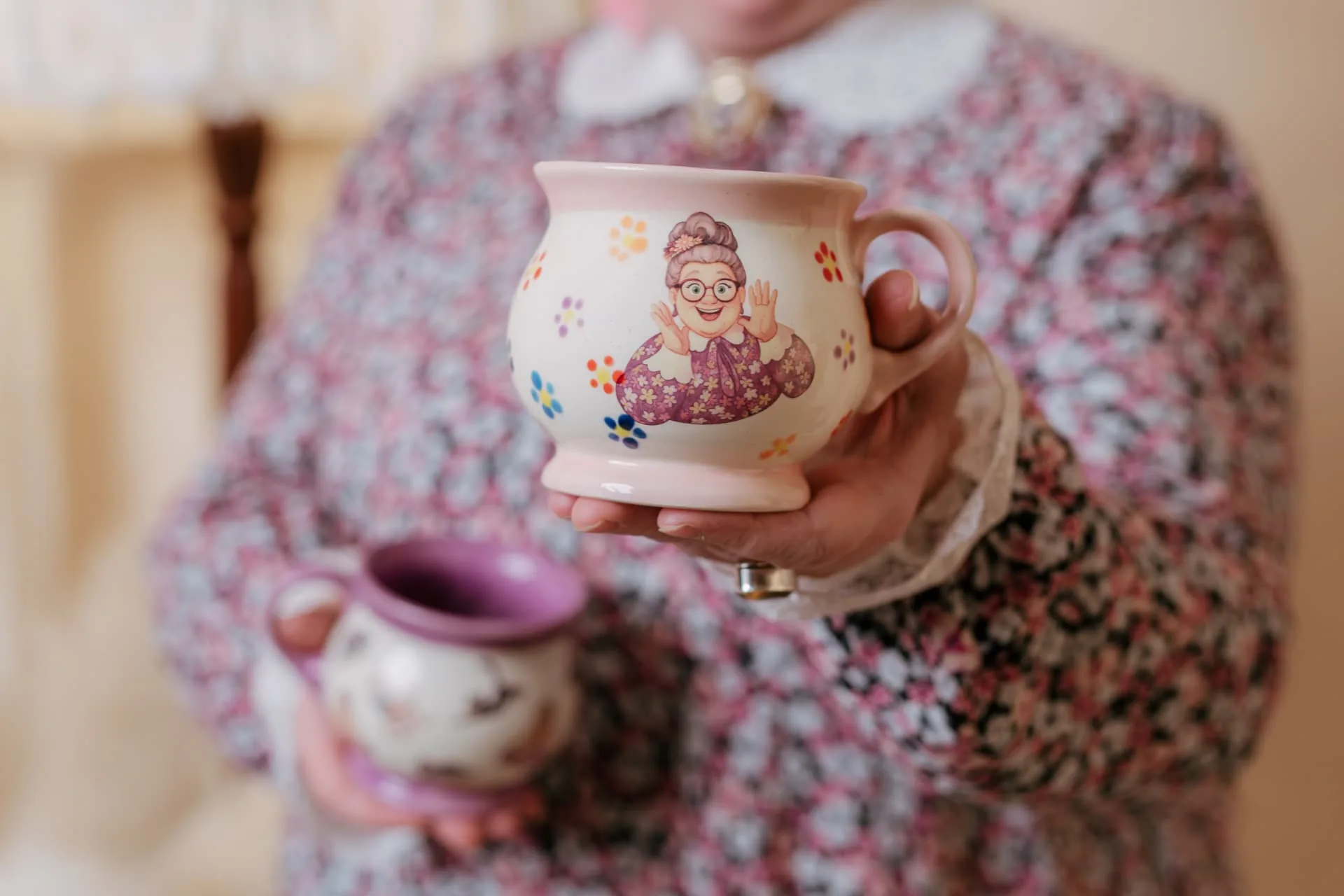
Some objects are made quickly, almost ready for use straight away. Others need time, patience and many stages of work before they reach someone's hands. Granny Kate's mug — Studio belongs to the second kind.
It is made by hand at the Gliniane BB studio, run by Beata Bołtromiuk. Before you can pour tea into it, it must travel from a lump of clay, through drying, sanding, glazing and three separate firings, to the final finishing of the base. It is a process spread over weeks, not hours.
It all begins with G&S 254 ceramic clay, from which the shape of the mug is formed. Freshly shaped ceramics cannot go straight into the kiln. First it must dry calmly, which takes about a week. Only then is the first firing possible, at around 950°C. This is the so-called bisque firing — the moment when the mug gains durability, but is still only at the beginning of its journey.
After coming out of the kiln, another stage of handwork begins. The surface of the mug is carefully sanded and washed, then prepared for glazing. It is the glaze that gives the ceramic its colour, shine and characteristic finish. The glazes used on the mugs are food-safe, so the vessel can be used every day with confidence.
Then the mug returns to the kiln for the second time. This time the temperature is much higher, reaching around 1240°C. It is this firing that creates the ceramic sinter and low porosity of the material. After it, the mug looks almost finished, but it is still missing one crucial element — Granny Kate herself.
Her image appears on the surface of the mug thanks to a specially prepared ceramic transfer. This allows the characteristic features of the figure known from Granny Kate's books and materials to be faithfully transferred onto the ceramic. The transfer alone, however, is not enough for the decoration to become a permanent part of the mug. A third firing is needed, this time at around 880°C, which fixes the design and gives the piece its final look.
At the end, all that remains is careful sanding of the base and a final check of each piece. Only then is the mug ready to leave the studio.
When we later hold it in our hands, the whole process is practically invisible. We see the colour, the pattern, the shape and the shine. We do not see the week of drying, the high temperatures, the successive sanding stages or the time spent on hand-finishing. Yet it is these invisible elements that make Granny Kate's mug — Studio not an ordinary printed mug, but a craft-made object, stage by stage.
At INKSIDE, we want the world of books to reach beyond the pages. That is why alongside stories there are objects that can accompany everyday rituals — reading, conversation, rest, evening tea. Ceramics, wood and natural materials fit well into Granny Kate's world because they evoke home, calm and closeness.
Such a mug can become part of a shared evening with a book, a gift for someone close, or simply a favourite vessel used every day. It does not need a grand occasion. Sometimes tea, a few quiet minutes and a story worth returning to are enough.
And perhaps that is why the fact that this mug takes weeks to make suits it so well. It reminds us that not everything valuable has to be made quickly.